Architect vs Drafter vs Designer: Who Do You Need?
Not sure whether to hire an architect, a drafter, or a building designer? This plain-English guide explains what each one does and when you need them.

Planning a home addition or a new build raises a question that trips up almost every first-timer: who actually draws the plans? You'll hear the words architect, drafter, and designer used interchangeably, but they mean very different things in terms of training, legal authority, and cost. Getting this wrong can mean paying for services you didn't need, or worse, submitting permit drawings that a building department rejects.
Here's a straightforward breakdown of each role, when you need each one, and how to figure out which fits your project.
At a glance
- An architect is state-licensed, can legally stamp drawings as code-compliant, and is required for most new homes and commercial work.
- A drafter produces technical drawings but has no license and cannot stamp anything or take legal responsibility for code compliance.
- A building designer sits in between: sometimes registered, sometimes not, and often allowed to handle straightforward residential permit drawings depending on local rules.
- The single fastest way to answer "who do I need" is a phone call to your building department before you hire anyone.
- Stock house plans still usually need a local professional to review, adapt, and sometimes stamp them before a permit office will accept them.
What an Architect Does
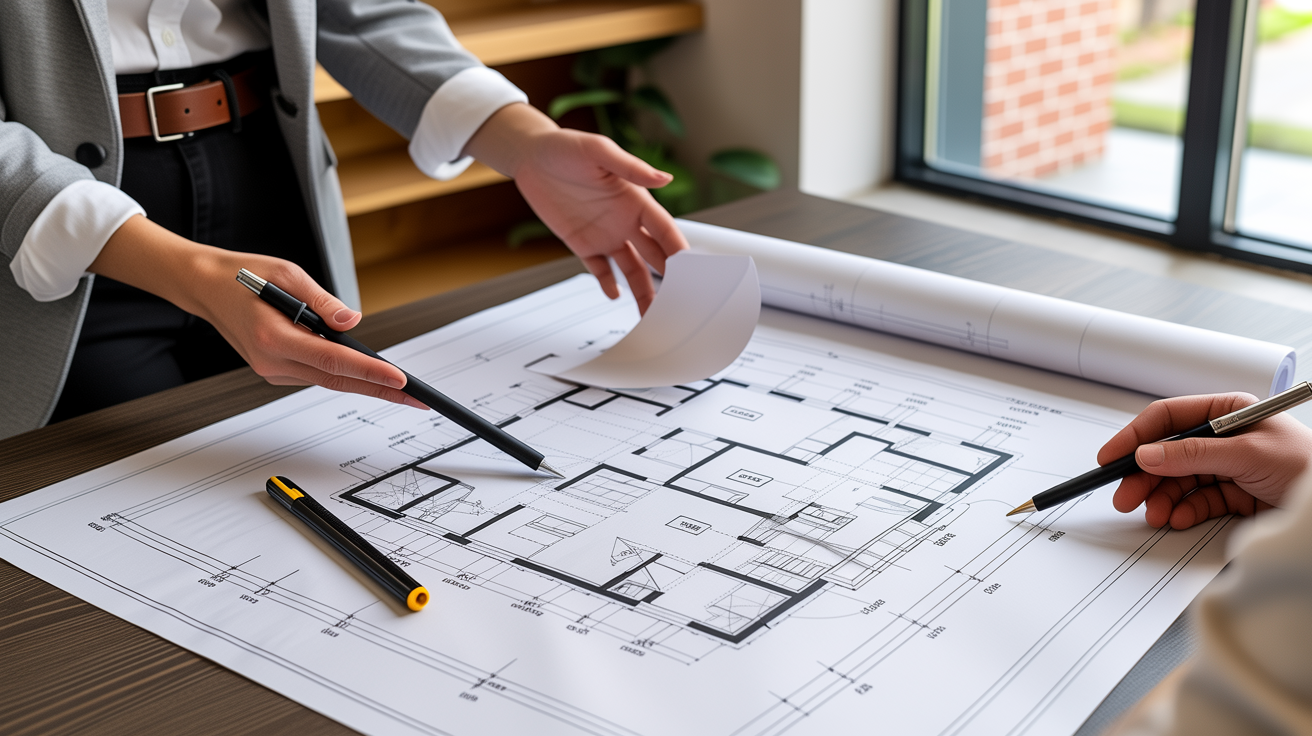
An architect is a licensed professional. In the United States, that means a degree from an accredited architecture program (typically a five-year Bachelor of Architecture or a graduate degree), several years of documented internship hours under a licensed architect, and passing the Architect Registration Examination (ARE). The process to licensure takes most people seven to ten years. Other countries have comparable requirements, though the specific exams and titles differ.
That license matters for two main reasons.
The Stamp
When an architect signs and stamps a set of drawings, they are legally certifying that the design meets applicable building codes and is structurally sound. Many jurisdictions require a licensed architect's stamp on permit drawings for projects over a certain size or complexity. A new single-family home, a major structural addition, or any commercial project almost always requires stamped drawings before a permit will be issued. Check with your local building department early, because the threshold varies significantly from one municipality to the next.
Design Judgment
Beyond the legal requirement, an architect brings design problem-solving that goes deeper than just producing drawings. They think about how spaces feel to move through, where light enters at different times of day, how a building performs in your climate, and how the structure needs to work given your soil conditions. For complex or unusual projects, that expertise saves money by catching problems before construction begins.
Architects typically charge either an hourly rate or a percentage of the construction cost (commonly 8 to 15 percent for a full-service residential project, though this varies widely by region and scope). For a straightforward project, many offer scaled-down service packages.
What a Drafter Does
A drafter produces technical drawings. That's the core of the job: taking a design concept, whether from an architect, an engineer, or a client's rough sketch, and turning it into precise, dimensioned, code-compliant construction documents that builders can follow.
Most drafters today work in CAD (computer-aided design) software and may specialize in architectural, structural, mechanical, or electrical drawings. A drafter with an architectural focus understands floor plan conventions, how to show wall thicknesses, how to draw door and window openings, and how to set up a sheet with a title block and proper notation.
What a Drafter Cannot Do
A drafter is not a licensed design professional. They can produce drawings, but they cannot stamp them as meeting code, take legal responsibility for the design, or make independent engineering judgments about structure or life safety. If you hire a drafter to produce your permit set, you may still need a licensed architect or structural engineer to review and stamp the drawings before the building department will accept them. Whether that's required depends entirely on your local regulations and the scope of work.
Drafters typically charge by the hour or by the sheet. For smaller, straightforward projects in areas that don't require a licensed stamp, a skilled drafter can be a cost-effective option for producing clear, build-ready drawings.
What a Building Designer Does
The title "building designer" covers a wide range of people. In some regions it's a formally regulated credential. In others, essentially anyone can call themselves a building designer. This is where things get confusing.
A residential building designer (sometimes called a home designer or architectural designer) typically has a two- or four-year degree in architectural technology or a related field, plus years of practical experience. They focus almost entirely on residential work and often handle the full process from concept to permit drawings.
Designer vs Architect: The Key Difference
In most of the United States, a building designer cannot stamp drawings as a licensed architect. However, many jurisdictions allow non-architect designers to produce and submit permit drawings for residential projects up to a certain size, typically one- and two-family homes under three stories. Some states and counties have a separate residential designer registration. Others have no registration requirement at all.
The practical result: for a standard addition or a modest new house in a permissive jurisdiction, a qualified building designer may be able to handle everything an architect would handle, at a lower fee. For anything with structural complexity, commercial use, or a jurisdiction that requires an architect's stamp, the designer alone won't get you to a permit.
Comparison at a Glance
| Role | Licensed? | Can Stamp Drawings? | Best For |
|---|---|---|---|
| Architect | Yes (state-licensed) | Yes | New construction, complex additions, commercial, any project requiring a stamp |
| Building Designer | Sometimes registered | Varies by jurisdiction | Residential work where local rules allow non-architect drawings |
| Drafter | No | No | Producing drawings from an existing design; simple projects in permissive areas |
Keep in mind this table describes general patterns. The rules in your specific city, county, or state may differ. Always confirm what your local building department requires before hiring anyone.
How to Figure Out What Your Project Needs
The fastest way to answer this question is to call your local building department before you hire anyone. Ask two questions:
- Does my project (describe the scope and size) require drawings stamped by a licensed architect?
- Can a registered building designer or a drafter produce permit drawings for this project type?
Most building departments are used to these calls and will give you a straight answer. They may also point you to a local permit guide or checklist that spells out the requirements.
Beyond the legal minimum, here are some practical rules of thumb:
- New custom home, An architect is worth the investment. The design decisions are complex, the dollar amounts are large, and a good architect often saves more than their fee by catching issues early.
- Standard house addition (bedroom, bathroom, or bump-out), A building designer or an experienced drafter working with a structural engineer may cover everything you need, depending on local rules.
- Deck or detached garage, In many jurisdictions, a drafter or even a careful homeowner can produce acceptable permit drawings. Check first.
- Interior remodel with no structural work, Often no permit is required at all, and therefore no professional drawings. Confirm with your building department.
- Commercial project of any size, Almost universally requires a licensed architect.
Once you know what construction documents your project requires, you can match the right professional to the job rather than defaulting to whoever you find first.
Working With the Person You Hire
Regardless of which professional you choose, a few habits make the process smoother.
Be Specific About What You Want
Come to your first meeting with a written list of your requirements: number of bedrooms, must-have features, budget range, any constraints you know about (setback from a fence line, a tree you want to keep, a neighbor's view). The more specific you are upfront, the less time gets spent on revisions.
Understand What You're Getting
Ask early what deliverables are included. Are you getting schematic sketches, permit-ready drawings, or full construction documents? What happens if the building department requests revisions? Is that included in the fee or billed separately?
Know Who's Responsible for Code Compliance
This matters especially if you hire a drafter or an unlicensed designer. Make sure you understand clearly whether their drawings are ready to submit for a permit or whether you need to take an additional step, such as hiring an engineer to review the structural elements, before you can apply. Misunderstandings here cause expensive delays.
Understanding how the building permit process works end-to-end helps you ask better questions before the first meeting.
A Word on Online Plan Services
You can buy stock house plans online for a fraction of what custom drawings cost. These plans are drawn by architects or designers and include full construction document packages. The catch: they are designed generically, not for your specific lot, local climate, or local building code. Before you submit stock plans for a permit, you will almost certainly need a local architect or engineer to review them, modify them to meet local requirements, and stamp them. Factor that cost in when you're comparing options.
Knowing what drawings you need for a building permit in your area makes it much easier to evaluate whether a stock plan package is actually usable as-is or needs significant rework.
Frequently Asked Questions
Do I always need a licensed architect for a home addition?
Not always. Many jurisdictions allow building designers or drafters to produce permit drawings for residential additions, particularly for one- and two-family homes. The threshold varies by state, county, and sometimes by city. Some areas require an architect's stamp for any structural work; others only require it above a certain square footage. Call your local building department and ask directly, since rules change and vary widely.
What's the difference between a building designer and an architect?
The core difference is licensure. An architect has passed a state licensing exam and can legally stamp drawings as certified to meet code. A building designer may have similar training and experience in residential work, but typically cannot stamp drawings (with some exceptions in certain jurisdictions that have their own residential designer licensing). For many standard residential projects, a qualified building designer can get you to a permit. For complex, large, or commercial projects, you generally need an architect.
Can a drafter submit permit drawings on my behalf?
A drafter can produce the drawings, but in most jurisdictions they cannot submit them as a responsible party or stamp them as code-compliant. Whether a building department will accept unstamped residential drawings varies by location and project scope. In some places, homeowners can pull their own permits and submit drawings they produced or hired someone to produce, without any licensed professional involvement. In others, a stamp is required. Check with your building department.
Is hiring an architect more expensive than a building designer?
Generally yes, though the gap varies. Architects tend to charge more per hour and may charge a percentage of construction cost for full-service projects. Building designers typically charge lower hourly rates and are usually focused on residential work with a more streamlined process. For straightforward residential projects in jurisdictions that don't require a licensed architect, the cost difference can be significant. For complex projects where you want full design services, the architect's fee often reflects real value in terms of design quality and problem-solving.
What if I just want someone to draw up plans from my own design?
That's exactly what a drafter does. If you have a clear idea of what you want and just need someone to produce clean, dimensioned, build-ready drawings, a drafter is the right person to call. The important caveat: find out first whether your permit application requires drawings stamped by a licensed professional. If it does, you'll either need to hire an architect to review and stamp the drafter's work, or hire an architect directly for the project.
Sources
For readers who want to verify licensure requirements or dig into a professional body's own guidance directly:
- NCARB: Get Licensed walks through the education, experience (AXP), and exam (ARE) path that every US architect completes, plus a state-by-state licensing requirements tool.
- Architect (Wikipedia) gives useful background on how licensure requirements evolved and how the profession is structured internationally, which is helpful context if you are comparing rules across countries.
- AIA Resource Center is the American Institute of Architects' hub for compensation data, contract documents, and general practice guidance if you want a sense of what a full-service architect relationship typically includes.