Space Planning Basics for Beginners
Learn space planning basics: how to size rooms, arrange furniture, set up traffic flow, and create a layout that actually works before you build or renovate.
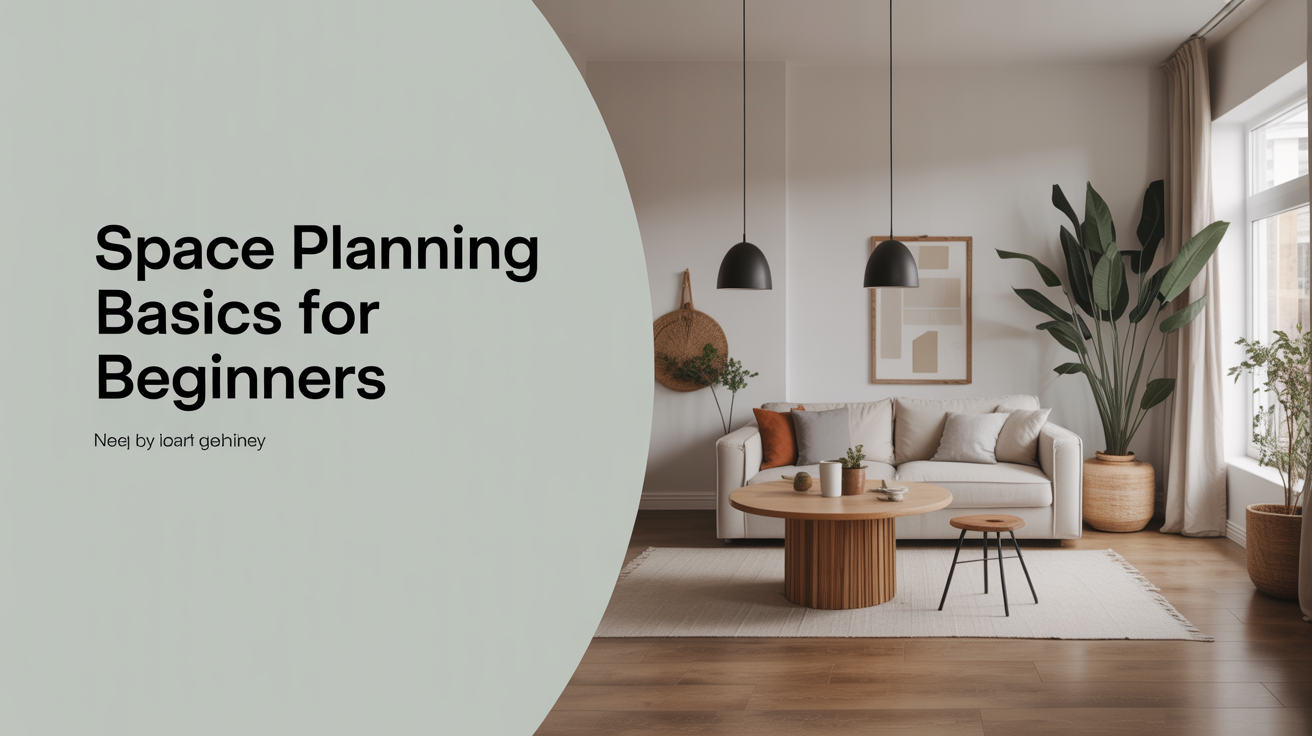
Space planning is the process of deciding how much square footage each part of a home gets, where the rooms sit in relation to each other, and how people move between them. It happens before walls go up, and the decisions made at this stage shape how comfortable a finished house feels every day.
You do not need a design background to think through a floor plan this way. A tape measure, some graph paper (or a free drawing app), and a clear list of how you actually live are enough to get started.
What Space Planning Actually Covers
When architects and designers talk about space planning, they mean three overlapping things:
- Room sizing. How big does each room need to be to hold its furniture and feel comfortable?
- Room adjacency. Which rooms should be next to each other, and which should be kept apart?
- Circulation. How do people walk from one room to another, and are those paths wide enough?
A kitchen could be beautifully designed on its own, but if it sits at the far end of the house from the garage where groceries come in, it will frustrate you every week. Space planning catches those problems on paper, where fixes are free.
Room Sizes: Useful Starting Points
Building codes set minimum room sizes in some regions (a habitable room often must be at least 70 sq ft / 6.5 sq m, with a minimum dimension of 7 ft / 2.1 m), but code minimums are tight. The numbers below are practical starting points for comfortable rooms, not legal requirements. Always confirm what your local building department requires, and have a licensed architect or engineer review any actual plans.
| Room | Compact but workable | Comfortable | Notes |
|---|---|---|---|
| Primary bedroom | 11 x 12 ft (3.4 x 3.7 m) | 13 x 14 ft (4 x 4.3 m) | Needs space for bed + two nightstands + dresser |
| Secondary bedroom | 10 x 10 ft (3 x 3 m) | 11 x 12 ft (3.4 x 3.7 m) | Single bed or twin bunk |
| Full bathroom | 5 x 8 ft (1.5 x 2.4 m) | 6 x 9 ft (1.8 x 2.7 m) | Tub, toilet, vanity |
| Half bath / powder room | 3 x 6 ft (0.9 x 1.8 m) | 4 x 6 ft (1.2 x 1.8 m) | Toilet + small sink only |
| Kitchen | 8 x 10 ft (2.4 x 3 m) | 10 x 14 ft (3 x 4.3 m) | One-wall vs. L-shape vs. island |
| Living room | 12 x 16 ft (3.7 x 4.9 m) | 15 x 20 ft (4.6 x 6.1 m) | Sofa, chairs, TV area |
| Dining room | 10 x 12 ft (3 x 3.7 m) | 12 x 14 ft (3.7 x 4.3 m) | Table for 6 with chairs pulled out |
These numbers assume standard ceiling heights (8 ft / 2.4 m). Taller ceilings make a small room feel less cramped but do not change the footprint.
Circulation: Paths People Walk Every Day
Minimum Corridor Widths
A hallway you have to turn sideways in gets old fast. General guidelines call for:
- Primary hallways: at least 36 in (91 cm) clear. Many codes require this minimum.
- Secondary hallways: 32 in (81 cm) is a common code minimum but 36 in (91 cm) is more comfortable.
- Kitchen work aisles: 42 in (107 cm) for a one-cook kitchen, 48 in (122 cm) if two people cook together.
These are working guidelines, and requirements vary by location and building type. Your local building department is the right place to confirm what applies to your project.
Thinking About Traffic Flow
Trace the paths you walk most often in your current home: from the front door to the kitchen, from the bedroom to the bathroom at night, from the garage to where you drop bags and keys. Those paths should be short and not cut through the middle of a room someone else is using.
A simple way to check a layout: put a dot on the floor plan at the front door, kitchen, each bathroom, each bedroom, and the garage. Then draw a line between every pair that you typically walk between. If lines keep crossing a single room (say, everyone passes through the dining room to get anywhere), that room will feel like a hallway even if it is sized like a dining room.
The "Wet Wall" Principle
Plumbing is expensive to move, so bathrooms, kitchens, and laundry rooms are cheapest to build when they share or back up against the same wall. Grouping wet rooms on one side of the house or stacking them vertically (a bathroom above a kitchen) cuts the length of pipe runs and can reduce cost significantly. This is not a hard rule, but it is worth keeping in mind early in layout planning.
Zoning: Separating Quiet from Loud
Residential layouts often divide naturally into three zones:
- Public zone (entry, living room, dining room, kitchen): spaces guests use
- Private zone (bedrooms, primary bathroom): spaces for sleeping and personal routines
- Service zone (laundry, garage, utility, storage): work and mechanical spaces
Keeping public and private zones separated reduces noise. A primary bedroom next to a home theater or a toddler's room directly below a home office creates predictable problems. On a single-story plan, putting bedrooms at one end of the house and living areas at the other is a simple fix. On two-story plans, stacking bedrooms over bedrooms (or living areas over living areas) rather than mixing them helps with both sound and structural framing.
How to Test a Layout Before You Finalize It
The Furniture Test
For every room in the plan, sketch in the largest pieces of furniture to scale. A queen bed is 5 ft x 6 ft 8 in (1.52 x 2.03 m); a full sofa is typically 7 to 8 ft (2.1 to 2.4 m) long. If you cannot fit the furniture without blocking a door or making the room feel like an obstacle course, the room is undersized for its purpose.
Doors need clearance to swing. A standard interior door is 2 ft 8 in (81 cm) wide and swings 90 degrees, sweeping a quarter-circle of floor space. On a floor plan, that arc is always drawn to show how much room the door consumes. Check that no door swings into furniture or into another door.
The "Live in It for a Day" Exercise
Sit with your layout and mentally walk through a typical weekday morning: waking up, bathroom routine, making breakfast, getting to work. Then a weekday evening: arriving home, where do bags go, cooking, eating, winding down, kids to bed. Friction points usually become obvious, such as the pantry that requires walking through the kitchen island to reach, or the single full bathroom serving four bedrooms.
If you are working with a set of stock plans from a plan provider, How to Choose a House Plan covers what to look for before you buy.
Common Space Planning Mistakes
Undersizing storage. Closets, pantries, linen storage, and garage space are routinely cut first when square footage gets tight. A primary bedroom closet under 6 ft (1.8 m) wide feels cramped for two people. A kitchen pantry under 2 ft (0.6 m) deep cannot hold standard shelf goods.
Forgetting mechanical space. HVAC equipment, water heaters, and electrical panels need room and access. A furnace in a corner with only 18 in (46 cm) of clearance on one side will be a headache at every service call.
Making the entry too small. An entry foyer of 6 x 6 ft (1.8 x 1.8 m) sounds reasonable until four people arrive at once, coats need somewhere to go, and there is a bench for putting on shoes. Entries earn their square footage.
Treating square footage as a fixed shape. A 200 sq ft (18.6 sq m) room that is 10 x 20 ft (3 x 6.1 m) is very different from one that is 14 x 14 ft (4.3 x 4.3 m), even though the area is almost the same. Long, narrow rooms are harder to furnish. Roughly square rooms (within reason) tend to feel more usable.
Moving from a Sketch to Actual Plans
Once you have a layout you like in rough form, an architect or designer will translate it into construction drawings with precise dimensions, structural information, and code compliance. If you want to try drawing your own floor plan to scale first, How to Design Your Own House Plan walks through the process step by step.
Understanding how total area breaks down is also useful at this stage. How Square Footage Is Calculated explains the difference between gross and net floor area and how builders typically measure each.
Keep in mind that building codes, zoning regulations, and setback requirements vary significantly by region and change over time. A layout that works in one municipality may need adjustments in another. Always confirm requirements with your local building department, and have a licensed architect or engineer review real plans before construction.
Frequently Asked Questions
How much square footage does a comfortable house need?
There is no single answer, because it depends on how many people will live there and how they use space. A rough benchmark sometimes cited by builders is 400 to 600 sq ft (37 to 56 sq m) per person for a comfortable but not oversized home. But lifestyle matters more than formulas: a couple who works from home needs dedicated office space; a family with young kids may need more common living area and less formal dining. Think about function first, then size.
Do I need an architect to do space planning?
Not for early sketching. Many people work through layouts themselves on paper or with free floor plan software before bringing in a professional. Where a licensed architect becomes necessary is when plans are submitted for a building permit, when structural decisions need engineering, or when local law requires a licensed professional to stamp the drawings. Check with your local building department early so you know what the requirements are for your specific project.
What is the difference between a floor plan and a space plan?
A floor plan is a drawing, usually to scale, showing walls, doors, windows, and fixed elements like stairs. A space plan is the thinking behind the drawing: decisions about how big each space should be, what goes where, and how the spaces connect. You do space planning before you draft a floor plan. The plan is the result; space planning is the process.
How wide should a hallway be?
In residential construction, 36 in (91 cm) is a commonly cited comfortable minimum for main hallways. Some building codes permit narrower hallways (sometimes as low as 28 to 32 in / 71 to 81 cm), but those feel tight and can create problems for moving furniture or for accessibility. If there is any chance the home will be used by someone with mobility challenges, 36 in (91 cm) clear is a sensible floor. Requirements vary by location, so confirm with your local building department.
Can I change a floor plan layout after construction starts?
Sometimes, but at increasing cost. Changes to wall locations are straightforward before framing but expensive after. Plumbing relocations get costly once concrete is poured or subfloor is down. The general rule in construction is that every design decision gets more expensive to change as the project moves forward. Spending extra time on layout decisions before any physical work starts is almost always the cheapest option.