Open vs Closed Floor Plans: Pros and Cons
Learn the real differences between open and closed floor plans, what each looks like on a blueprint, and which layout suits your lifestyle.
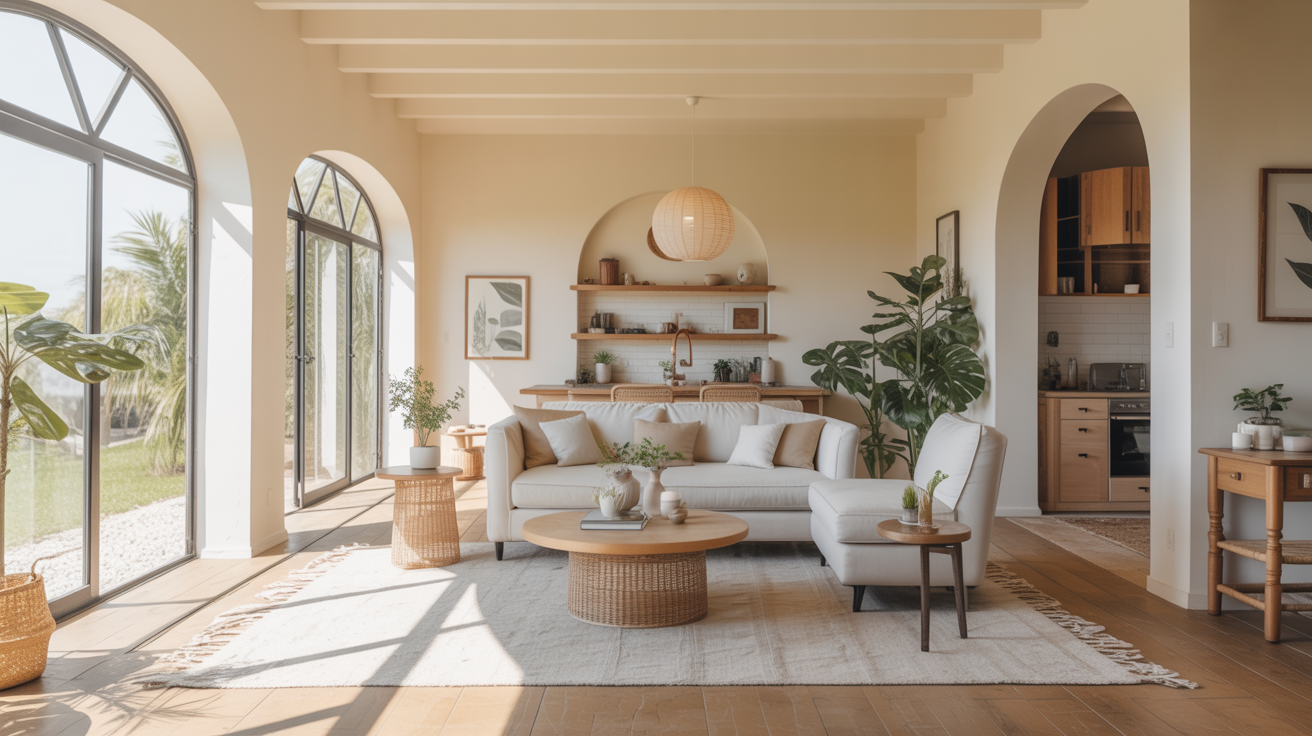
Walk into most homes built before the 1980s and you'll find a kitchen boxed in by walls, a separate dining room, and a living room behind a door. Walk into most new construction today and you'll find one big connected space where the kitchen, dining area, and living room all flow together. That shift is the open vs closed floor plan debate in a nutshell.
If you're looking at house plans, trying to understand a floor plan you've been handed, or thinking about removing a wall, this guide explains what each layout actually means on a drawing, the genuine trade-offs of each, and the structural questions you need to answer before touching any wall.
What Do Open and Closed Plans Look Like on a Drawing?
On a floor plan, walls appear as thick solid lines. Openings for doors and windows interrupt those lines. The more solid lines dividing the main living areas, the more "closed" the plan.
Closed floor plan
In a closed layout, the kitchen typically has three or four walls with a single doorway (sometimes a pass-through window). The dining room and living room each have their own walls and doors. On the drawing you'll see distinct rectangular rooms, each clearly bounded.
Open floor plan
In an open concept layout, the kitchen, dining, and living areas share one large footprint. On the drawing, exterior walls bound the space, but there are few or no interior walls between those three zones. Sometimes a kitchen island or a half-wall (shown as a thin single line) marks the boundary between areas without actually separating them.
Semi-open layouts
A common middle-ground places the kitchen partly open to the living area but keeps the dining room defined by a partial wall or a change in ceiling height. These show up on drawings as rooms where one side has an opening without a door rather than a full doorway with a door swing.
Understanding how to read a floor plan helps you spot these distinctions quickly, especially when you're comparing several sets of house plans side by side.
Pros and Cons at a Glance
| Factor | Open Plan | Closed Plan |
|---|---|---|
| Natural light | Spreads across the whole space | Each room controlled separately |
| Sight lines | Adults can see kids/guests while cooking | More privacy; less visual clutter |
| Noise | Cooking sounds, TV, and conversations mix | Sounds stay in their rooms |
| Cooking smells | Travel throughout the living area | Contained in the kitchen |
| Heating and cooling | One large zone; can be harder to condition | Rooms can be closed off independently |
| Furniture arrangement | More flexibility; no walls to anchor to | Walls define natural furniture positions |
| Resale appeal | Currently popular with many buyers | May suit buyers who want separation |
| Renovation cost | Removing walls to open a space is expensive | Adding walls is generally cheaper |
The Pros of an Open Floor Plan
Light and the feeling of space
When walls come down, windows on opposite sides of the house can send light across the entire living area. A modest 1,400 sq ft (130 sq m) home can feel much larger than the numbers suggest when there's nothing blocking the view from the kitchen to the back windows.
Easier supervision of kids and guests
If you cook frequently, an open layout means you're in the conversation instead of behind a door. Parents with young children often cite this as the single biggest reason they chose open concept, since they can watch a toddler in the play area while making dinner.
Flexible use of space
Without fixed walls, the dining area can expand for a large gathering, or the living zone can shift as your furniture needs change. On a floor plan drawing, this flexibility shows up as square footage that isn't pre-assigned to a single function.
The Pros of a Closed Floor Plan
Noise control
This is the closed plan's most underrated strength. If one person is watching TV while another is on a work call and a third is cooking with the exhaust fan running, walls matter. Each room becomes acoustically separate, which is hard to replicate with rugs and soft furnishings alone.
Smells stay put
Cooking smells, good and bad, don't migrate through the house. This is more than just a comfort issue for some households; strong cooking odors reaching bedrooms or a home office can be a daily annoyance in an open layout.
Easier to heat and cool individual rooms
A closed plan lets you shut doors and condition only the spaces you're using. In a large open concept space, the HVAC system has to treat one big volume all at once. This can mean higher energy bills, especially in homes with high ceilings, and hot or cold spots near windows that are hard to fix without upgrading the system.
Visual calm
In an open plan, clutter in one area is visible from everywhere. Dishes on the counter are visible from the living room; toys on the floor are visible from the dining table. A closed plan contains each room's state of disorder to that room.
The Real Cost of Removing Walls
Many buyers look at an older closed floor plan and think: I could just open that up. Sometimes that's true. Sometimes it's a significant structural project.
Load-bearing vs non-load-bearing walls
On a floor plan, all interior walls look similar as thick lines. But some of those walls carry the weight of the floor or roof above them down to the foundation. Remove a load-bearing wall without replacing it with a beam and posts, and the structure above it has nowhere to transfer its load.
There's no reliable shortcut to identifying a load-bearing wall from the floor plan alone. General clues include walls that run perpendicular to floor joists, walls that stack from floor to floor, and walls that sit near the center of the house. But these are only clues. A licensed structural engineer or architect needs to confirm which walls carry load before any demo begins, and in most jurisdictions a permit is required before removing a bearing wall. Always check with your local building department on permit requirements before starting this work.
HVAC implications
Removing walls also changes how air circulates. A closed kitchen had its own supply and return vents sized for that room's volume. Opening it to the living area creates a larger combined zone that may push the HVAC system past its capacity, resulting in uneven temperatures or reduced efficiency. An HVAC contractor should review the system if you're planning major wall removal.
Plumbing and electrical inside walls
Some interior walls contain plumbing pipes or electrical runs. Before assuming a wall is just framing and drywall, have a contractor open a small section to check what's inside, or use a non-invasive stud-and-pipe finder as a first pass.
How to Read Open vs Closed Layouts on a Blueprint
Once you know what to look for, reading floor plans for this purpose becomes straightforward. Focus on:
- Thick solid lines between the kitchen, dining, and living areas. More lines = more closed.
- Door symbols (a straight line with a quarter-circle arc showing the door swing). Lots of these between living spaces = closed plan. Knowing your door and window symbols on floor plans makes this faster to assess.
- Pass-throughs and half-walls drawn as thinner lines or hatched areas that don't extend to the ceiling.
- Room labels. If the drawing labels separate boxes as "Kitchen," "Dining Room," and "Living Room," each bounded by walls, it's a closed plan. If a single large space gets all three labels or just "Great Room," it's open.
When comparing plans, look at how the kitchen relates to the main living areas. That single relationship defines most of the open vs closed experience for daily life.
Which Layout Should You Choose?
There's no universally better answer. The honest version is that it depends on how your household actually lives.
A family with young kids and a love of entertaining tends to find open plans genuinely better for their lifestyle. A household where two people work from home on video calls, have different sleep schedules, or where someone cooks fragrant food every evening often finds the closed plan's separation a practical asset they didn't know they needed.
If you're evaluating existing plans, try to spend time in both types of spaces before deciding. A floor plan drawing is accurate but flat. Standing in a real open kitchen at 7 a.m. with a noisy blender while someone else is trying to read is a useful data point that a drawing can't give you.
Frequently Asked Questions
Can I convert a closed floor plan to an open one?
Often yes, but the cost and complexity vary a lot. Non-load-bearing walls are relatively straightforward to remove. Load-bearing walls require an engineered beam, new posts or columns, and usually a permit. Have a licensed structural engineer evaluate the walls before any demo, and confirm permit requirements with your local building department.
Do open floor plans always feel bigger?
They tend to, especially in homes with modest square footage, because sightlines are longer and natural light spreads more evenly. But a well-lit, well-proportioned closed plan with appropriately sized rooms can feel just as spacious, and some people find clearly defined rooms feel more comfortable than one large undivided area.
Are open floor plans harder to heat and cool?
They can be. One large open volume is harder to zone than several separate rooms. If the HVAC system was sized for a closed layout and walls are later removed, it may struggle to keep the larger space comfortable. A heating and cooling contractor can assess whether your current system has the capacity for an open layout.
Will a closed floor plan hurt resale value?
Not necessarily. Open plans have been popular with many buyers since the early 2000s, but buyer preferences vary by region, age group, and lifestyle. A closed plan with good bones, updated finishes, and well-proportioned rooms can sell well in most markets. If resale is a concern, talking with a local real estate agent about what buyers in your specific area prefer is more useful than following a general trend.
How do I tell from a floor plan whether a wall is load-bearing?
You can't tell with certainty from the floor plan alone. Indicators like walls stacking between floors or running perpendicular to the floor joists suggest a wall may be load-bearing, but confirmation requires a structural engineer or architect to review the drawings and often inspect the structure in person. Never remove a wall based on floor plan clues alone.